Anatomy of Absence nominated for Helsingin Sanomat Best Debut Prize

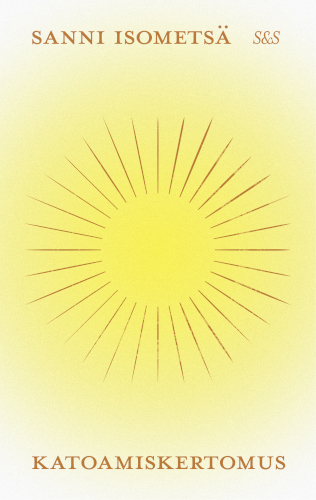
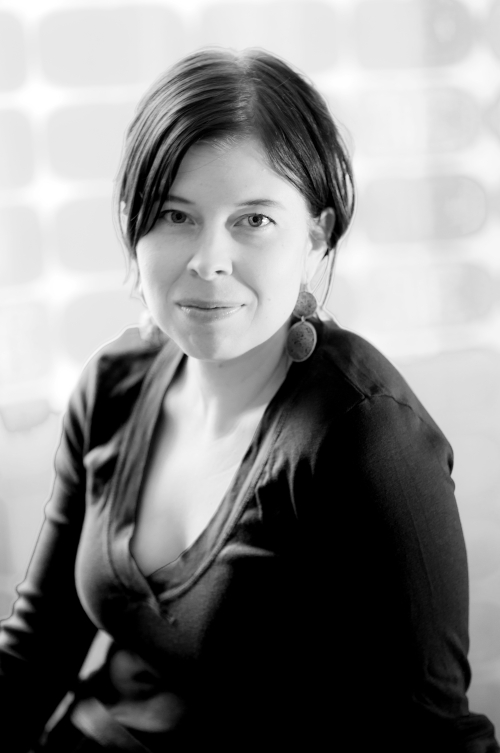
Great news after the Helsinki Book Fair: the yearly best debut award nominees have been announced, and Sanni Isometsä’s beautiful Anatomy of Absence is among them!

The Best Debut Prize was established by the biggest newspaper in Finland, Helsingin Sanomat, in 1995, as a continuation for the previously awarded J. H. Erkko prize. The winner is awarded 15,000 euros prize. This year, the winner will be chosen out of 7 nominees and announced on the 12th of November.

Anatomy of Absence is an impressively strong debut on HLA’s list, proclaimed to be “sensational” by the Helsingin Sanomat immediately after publication. It tells a story about grief without solemnity or self-pity. In the book, the narrator, who is a midwife, suddenly loses her husband when he is just 38. The precise prose moves between you and I, addressed to the dead, then reclaimed by the living, described as breathing in and out. It is written in fragments, the way memory returns: out of order, out of proportion, arriving unbidden.

The book has drawn a lot of attention at this year’s Frankfurt Book Fair, so foreign rights deals are expected soon.

Congratulations to the author!

Sanna Pelliccioni nominated for the Astrid Lindgren Memorial Award

Beautiful news for Finland’s illustration world: author and illustrator Sanna Pelliccioni has been nominated for the 2027 Astrid Lindgren Memorial Award!

The award is given annually to a person or organisation for their outstanding contribution to children’s and young adult literature. With a prize of five million Swedish kronor, it is the largest award of its kind, and regarded as one of the most important in the world recognising literature for young readers.

Pelliccioni is one of of 277 candidates from 80 countries and regions who have been nominated.

Pelliccioni is known for the wide range of her own books, as well as collaborations with other Finnish authors. HLA has successfully represented her picture books Sent Across the Sea (together with Eppu Nuotio), Forest Field Notes (together with Johanna Venho) and many others.

Sanna Pelliccioni’s Instagram profile can be found here.

Congratulations to the author for this incredible distinction!

3 foreign rights deals for My Therapist is a Werewolf

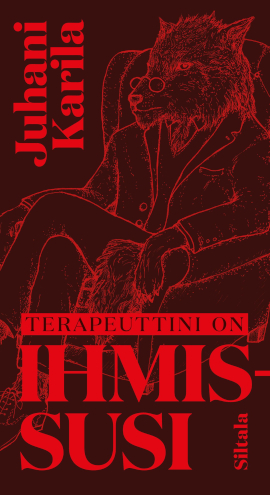
Autumn season has begun, and with it, foreign rights sales are rolling! My Therapist is a Werewolf, this autumn’s most anticipated novel on the HLA list, written by Juhani Karila, starts its journey abroad with 3 foreign rights sales.

Marpress sealed the deal for the Polish rights on the book publication day in Finland, a bit more than a week ago; Jensen & Dalgaard followed with the acquisition of Danish rights; and La Peuplade acquired World French rights at the Gothenburg Book Fair last week. All three publishers have previously published Karila’s novel Fishing for the Little Pike, which has been sold to 22 territories altogether.

My Therapist is a Werewolf introduces us to a whole new array of odd creatures, but the people in it a recognisably loveable, helpless, and funny without often meaning to be so. This time, the setting is fantastical Helsinki, where the main character, Eve, struggles with her relationship and unresolved traumas, talks about her problems with a large, sharp-toothed werewolf, and plays table tennis a lot.

The novel is a story about mental health, us and them, and the literal and figurative spins life throws at you. Therapy led by a werewolf is unpredictable, but help rarely arrives in the shape you were expecting.

Frankfurt Book Fair is starting next week, so more deals are expected soon – stay tuned!

Congratulations to the author and his publishers!

The Guardian names Helsinki Trilogy among the best translated fiction

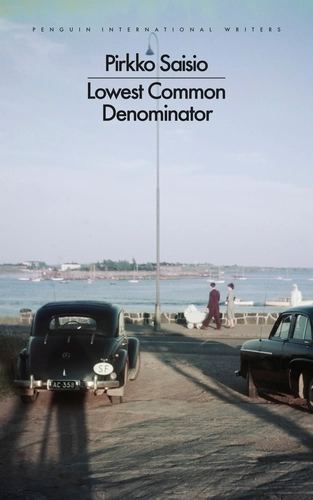
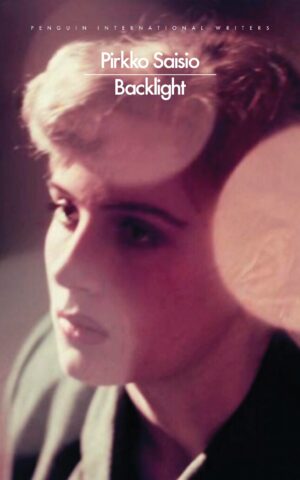
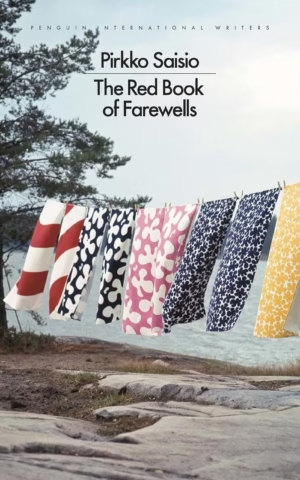
Fantastic week for Finnish fiction: Pirkko Saisio’s Helsinki Trilogy was named among the best recently translated fiction by The Guardian’s John Self. The books are translated into English by Mia Spangenberg.

Self describes The Red Book of Farewells, the final part in the trilogy, as “clear prose” that “playfully shifts between third and first person” and concludes that “this enchanting series deserves to become a modern classic”. Helsinki Trilogy is published in the UK by Penguin Random House.

Earlier this year, also Financial Times ran a piece on the trilogy, calling it “a Finnish masterpiece of autofiction”.

Saisio’s trilogy has already travelled to 14 territories, becoming one of the most successful modern classics from Finland in the recent years and garnering prestigious accolades on the way. The autofictional books carry the reader through the childhood, adolescence and adulthood of a girl who wanted to be a boy and started calling herself “her” when she was eight years of age.

The strong themes of the trilogy – the relationship between an individual and the society, sexuality and being queer, and finding your voice – are told in a fragmentary, lyrical style, descriptive of Saisio. As the background, there is Helsinki, changing as the decades go by.

Marisha Rasi-Koskinen’s Caesura wins the Tähtivaeltaja Prize

The writer’s eighth novel is a psychologically perceptive observation on the soul life of robots and humans.

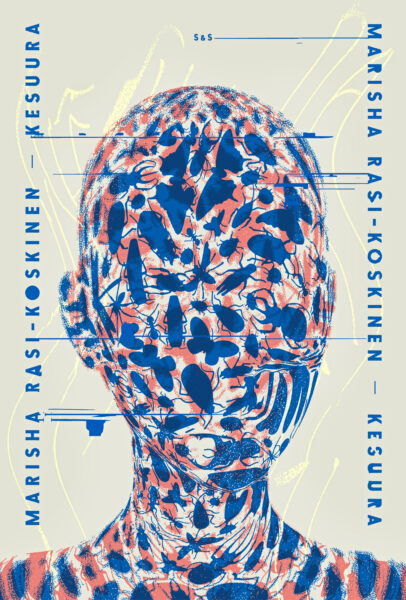
Author Marisha Rasi-Koskinen has been awarded the Tähtivaeltaja Prize for her most recent novel, Caesura. The prize has been given yearly for the last 40 years, to a work of fiction that bends and expands the definition of sci-fi and speculative literature. It is also unique in Finland, in that both original and translated novels published in Finland during the year compete for the prize. Previous winners include Kazuo Ishiguro, Margaret Atwood, Lauren Beukes, and Cormac McCarthy, among others.

Known for her eerie, mind-boggling, Lynchian fiction, Rasi-Koskinen was praised by the jury for “an extraordinary feat of power that sheds light on the formation of a thinking mind” and its uncompromising nature, showing “how humans create another being in their own image, but then refuse to recognize their similarity”. (See full jury statement below.)

Caesura is Rasi-Koskinen’s eighth novel; her previous adult novel REC was hailed as a structural, stylistic and narrative phenomenon, and won the prestigious Runeberg Prize, as well as the Torch-Bearer Prize, given yearly to a title considered to have the most potential to succeed outside Finland. As the Tähtivaeltaja jury rightly summed it up: Rasi-Koskinen’s works are “of world-class quality, and would immediately earn a place on the lists of international awards.”

In her speech, Rasi-Koskinen emphasised that, to her, “speculative fiction hasn’t been so much a genre as a way to live in this world. (…) This manifests itself in two lifelong attempts: an attempt to search for and question the structures behind phenomena that seem self-evident to us; and an attempt to show courage and look for alternatives.”

Rasi-Koskinen’s works have been previously sold to France, Denmark, Hungary and Lithuania.

FULL JURY STATEMENT

Marisha Rasi-Koskinen’s eighth novel, Caesura, is an extraordinary feat of power that sheds light on the formation of a thinking mind. It mirrors human consciousness and the information processing of artificially constructed brains. Psychologically perceptive, even crude in its uncompromising nature, this work shows how humans create another being in their own image, but then refuse to recognize their similarity.

[In the novel, it is near future], and we have learned to build human-like androids, which are trained to perform various maintenance and care tasks. Initially childlike, the artificial beings are shaped and develop organically, through what they learn and experience. Biological growth is imitated by insect-like transformations from one growth stage to another.

The main character, an android named QED, is passionately seeking connection with the world and other species, but finds it difficult to identify with human beings. Through the mutual reflections of QED and his android siblings, we are led as if by stealth into the dilemmas of epistemology: what can be known and how can one know that one does not know.

The story, which skillfully moves through several time levels, unfolds gradually, dispensing information and surprising twists at just the right pace. The sharp difference in the agency and innate value of humans and androids echoes the gap in the modern world between humans and other species of animals. Instead of being moralised, the reader follows a chilling observation of what kind of boundaries are erected between different sentient beings, and how difficult it is to tear them down.

Androids are at the same time fascinatingly alien in their biology, but shockingly relatable in their psychology. Ethical and moral reflections on the mental processes of artificial intelligences could not be more timely.

Much has been written about the soul life of robots in recent decades, but Caesura offers a rare fresh perspective on the ingredients of consciousness and how circumstances shape it. A work that dives straight into the depths is of world-class quality, and would immediately earn a place on the lists of international sci-fi awards.