Hopelessness by Susanna Hast has been nominated for the European Union Prize for Literature.

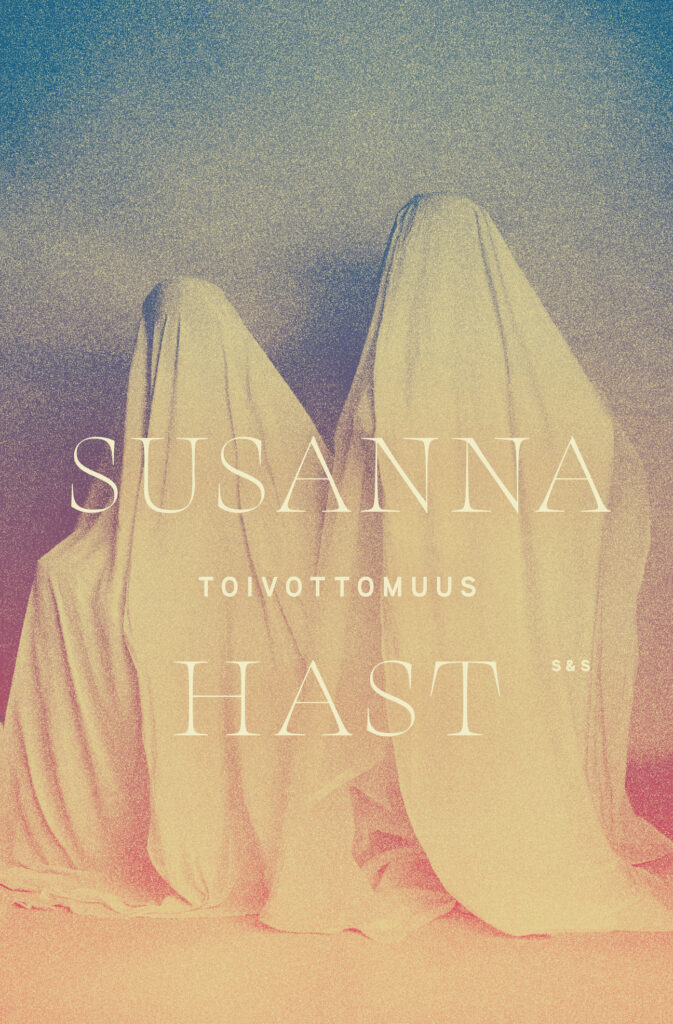
We’re delighted to share that Hopelessness by Susanna Hast has been nominated for the European Union Prize for Literature.
The European Union Prize for Literature, established in 2009, was created by a consortium formed by the European and International Booksellers Federation (EIBF), the Federation of European Publishers (FEP), and the European Writers’ Council (EWC). Each year, a list of nominees representing countries of the Union and beyond is published and among these a winner and two honourable mentions are picked. The 2026 EUPL Prize laureate and the two special mentions will be revealed on 29 May 2026 at the Museum of Modern Art in Warsaw, during the city’s annual book fair. All shortlisted authors will be continuously promoted on the European stage, aiming to reach a wider and international audience, as well as connect with readers beyond their national and linguistic borders.

Hopelessness explores maternal rejection, diving deep into the subconscious and showing the institution of family and the concepts that hold it together – inheritance, gift, father, mother – in a merciless light. The work approaches the internal violence of intimate relationships, the necessity of separation and the horror of duality. It is a novel that stings from beginning to end.
Susanna Hast works as a researcher and Associate Professor at Uniarts university in Helsinki. She has researched war, compassion and corporality. Her debut novel Body of Evidence was awarded the Helsingin Sanomat Literature Prize for the best debut of the year in 2022. Hopelessness is her second novel, and it was nominated for the prestigious Runeberg Prize.
Both her novels are published in Finland by Kustantamo S&S.
Warmest congratulations to the author and the publisher!