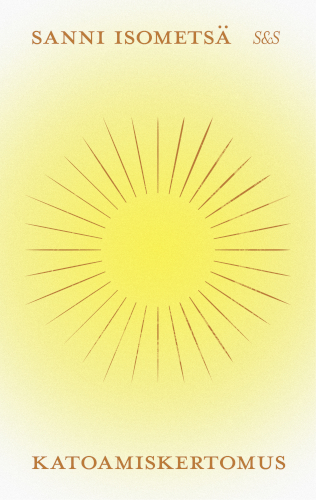
Great news after the Helsinki Book Fair: the yearly best debut award nominees have been announced, and Sanni Isometsä’s beautiful Anatomy of Absence is among them!
The Best Debut Prize was established by the biggest newspaper in Finland, Helsingin Sanomat, in 1995, as a continuation for the previously awarded J. H. Erkko prize. The winner is awarded 15,000 euros prize. This year, the winner will be chosen out of 7 nominees and announced on the 12th of November.
Anatomy of Absence is an impressively strong debut on HLA’s list, proclaimed to be “sensational” by the Helsingin Sanomat immediately after publication. It tells a story about grief without solemnity or self-pity. In the book, the narrator, who is a midwife, suddenly loses her husband when he is just 38. The precise prose moves between you and I, addressed to the dead, then reclaimed by the living, described as breathing in and out. It is written in fragments, the way memory returns: out of order, out of proportion, arriving unbidden.
The book has drawn a lot of attention at this year’s Frankfurt Book Fair, so foreign rights deals are expected soon.
Beautiful news for Finland’s illustration world: author and illustrator Sanna Pelliccioni has been nominated for the 2027 Astrid Lindgren Memorial Award!
The award is given annually to a person or organisation for their outstanding contribution to children’s and young adult literature. With a prize of five million Swedish kronor, it is the largest award of its kind, and regarded as one of the most important in the world recognising literature for young readers.
Pelliccioni is one of of 277 candidates from 80 countries and regions who have been nominated.
Pelliccioni is known for the wide range of her own books, as well as collaborations with other Finnish authors. HLA has successfully represented her picture books Sent Across the Sea (together with Eppu Nuotio), Forest Field Notes (together with Johanna Venho) and many others.
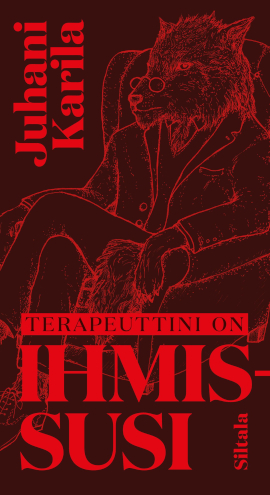
Autumn season has begun, and with it, foreign rights sales are rolling! My Therapist is a Werewolf, this autumn’s most anticipated novel on the HLA list, written by Juhani Karila, starts its journey abroad with 3 foreign rights sales.
Marpress sealed the deal for the Polish rights on the book publication day in Finland, a bit more than a week ago; Jensen & Dalgaard followed with the acquisition of Danish rights; and La Peuplade acquired World French rights at the Gothenburg Book Fair last week. All three publishers have previously published Karila’s novel Fishing for the Little Pike, which has been sold to 22 territories altogether.
My Therapist is a Werewolf introduces us to a whole new array of odd creatures, but the people in it a recognisably loveable, helpless, and funny without often meaning to be so. This time, the setting is fantastical Helsinki, where the main character, Eve, struggles with her relationship and unresolved traumas, talks about her problems with a large, sharp-toothed werewolf, and plays table tennis a lot.
The novel is a story about mental health, us and them, and the literal and figurative spins life throws at you. Therapy led by a werewolf is unpredictable, but help rarely arrives in the shape you were expecting.
Frankfurt Book Fair is starting next week, so more deals are expected soon – stay tuned!
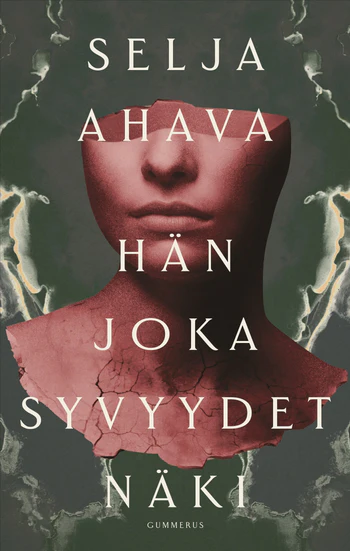
Fig Tree Publishing, an imprint of Penguin Random House UK, has secured the World English rights to He Who Saw The Deep by Selja Ahava, marking the fourth foreign deal for this title.
A wonderful beginning of autumn for our author Selja Ahava, who’s 2025 novel He Who Saw The Deep continues its journey out into the world: Fig TreePublishing, an imprint of Penguin Random House UK, has secured the World English rights to this title.
He Who Saw The Deep (Hän joka syvyydet näki, Gummerus 2025)
Acquiring editor Ella Harold has stated: “I’m incredibly excited about He Who Saw The Deep, and the prospect of publishing Selja Ahava’s remarkable new novel at Fig Tree. It’s a wonderful novel: mesmerising, ambitious, and deeply humane, so broad in its sources of inspiration, but so compelling and readable.” In her vision, He Who Saw The Deep can be placed on the shelves of readers of Jon Fosse, Annie Ernaux, Solvej Balle, and especially Olga Tokarczuk’s Flights, and Benjamin Labatut’s When We Cease To Understand The World, in which, much like in He Who Saw The Deep, the literary whole consists of a mosaic of literary, cultural, and scientific references.
Fig Tree is an imprint with a sharp and ambitious eye for translated fiction. Under its roof, Ahava joins the ranks of Swedish author Andrev Walden and his bestselling, August Prize-winning novel, Bloody Awful in Different Ways (Jävla Karlar), and Martina Hefter, and her Deutscher Buchpreis-winning novel Hey, Good Morning. Fig Tree is also home for Glorious Exploits by Ferdia Lennon and I Want to Go Home But I’m Already There by Róisín Lanigan.
Author Selja Ahava
In He Who Saw the Deep, award-winning author Selja Ahava writes about two of the most human feelings: love and fear of death. Liisa is a middle-aged woman in whose family people seldom live to old age. When she meets the love of her life, it is evident that their time together is limited. When her only living older relative falls deathly ill, Liisa is forced to grapple with the inevitability of death, and she begins to collect and write stories that give her a chance to explore the idea of mortality and the pursuit of immortality. The stories follow situations where the line between life and death, the dead and the living, is walked, observed, and redrawn. The fragments of stories are weaved together, resulting in a modern rhapsody held together by Liisa’s own story. The book is published in Finland by Gummerus, and has already travelled to Denmark, Hungary, and Poland.
Selja Ahava (b. 1974), author and dramaturg, is one of the most prominent voices in contemporary Finnish fiction. Her second novel, Things that Fall from the Sky (2015), is a winner of the European Union Prize for Literature 2016, and a nominee of the Finlandia Prize and the Torch-bearer Prize; foreign rights of this novel have been sold to 28 territories.
Congratulations to the author for this wonderful deal!
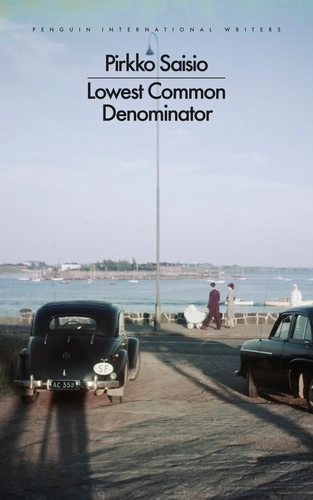
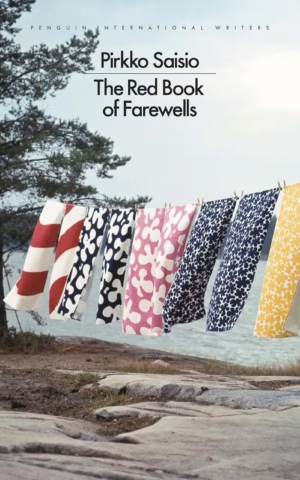
Fantastic week for Finnish fiction: Pirkko Saisio’s Helsinki Trilogy was named among the best recently translated fiction by The Guardian’s John Self. The books are translated into English by Mia Spangenberg.
Self describes The Red Book of Farewells, the final part in the trilogy, as “clear prose” that “playfully shifts between third and first person” and concludes that “this enchanting series deserves to become a modern classic”. Helsinki Trilogy is published in the UK by Penguin Random House.
Saisio’s trilogy has already travelled to 14 territories, becoming one of the most successful modern classics from Finland in the recent years and garnering prestigious accolades on the way. The autofictional books carry the reader through the childhood, adolescence and adulthood of a girl who wanted to be a boy and started calling herself “her” when she was eight years of age.
The strong themes of the trilogy – the relationship between an individual and the society, sexuality and being queer, and finding your voice – are told in a fragmentary, lyrical style, descriptive of Saisio. As the background, there is Helsinki, changing as the decades go by.